Cayenne
My only personal experience of it was as a child, I was there as a part of our New Year celebrations I believe. This would have been the early 2000s because I remember my childlike perception being of wonder, particularly in being made to wear a shirt. I could tell this was an upmarket restaurant especially for Belfast even at that young age since we did not have a great deal of “upmarket”-ness although I could be wrong because again I was a child so what was I to know.
We were seated in a booth that looking back on it, this evoked a sense of exclusivity when compared to the majority of seating, of which lined a wall alongside one another with grouped tables opposite. Of the food, I remember very little if anything, as it was quite an “adult” setting. But I digress from what Cayenne was and its place in Belfast food history.
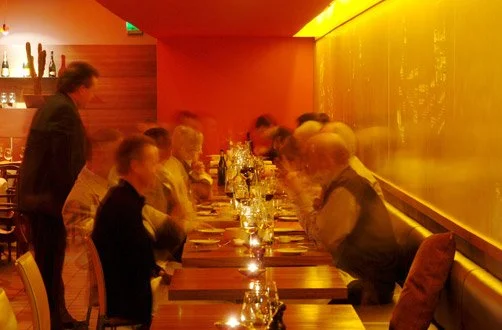
Interior tables to the right of the main entrance way, if memory serves
Cayenne was a restaurant based in Belfast, owned and managed by Paul Rankin. Paul Rankin is the first chef in Northern Ireland to have received a Michelin star with his original restaurant Roscoff. Cayenne could be found in Ascot House in Shaftesbury Square, what was once termed by Paul Rankin himself as the “golden mile” of Belfast at the time of Cayenne’s birth. Subsequently, a global recession coupled with local unrest led to its eventual closure in 2013. However, both concept and execution were well received and enjoyed by many, with Cayenne enjoying an eventful life of 14 years.
The menu solidified fusion as a staple in Northern Ireland combining Irish/British fare with Asian and Italian flavours. Many of the dishes contained locally sourced ingredients, but introduced in novel dishes. For example, Spaghettini Molly Malone, an obviously Italian dish celebrating local seafood in cockles and mussels, or New Style Irish Stew, a seemingly offensive sounding dish (particularly to tradition) which otherwise brought a welcome Mediterranean twist to a hearty homemade favourite.
Below are other examples of innovation for the Northern Ireland, for example, salt and chilli squid now seen in some form across many menus across Northern Ireland, if not further still, presently. A patron had an opportunity to mix and match as they saw fit, allowing adventure alongside comfort.
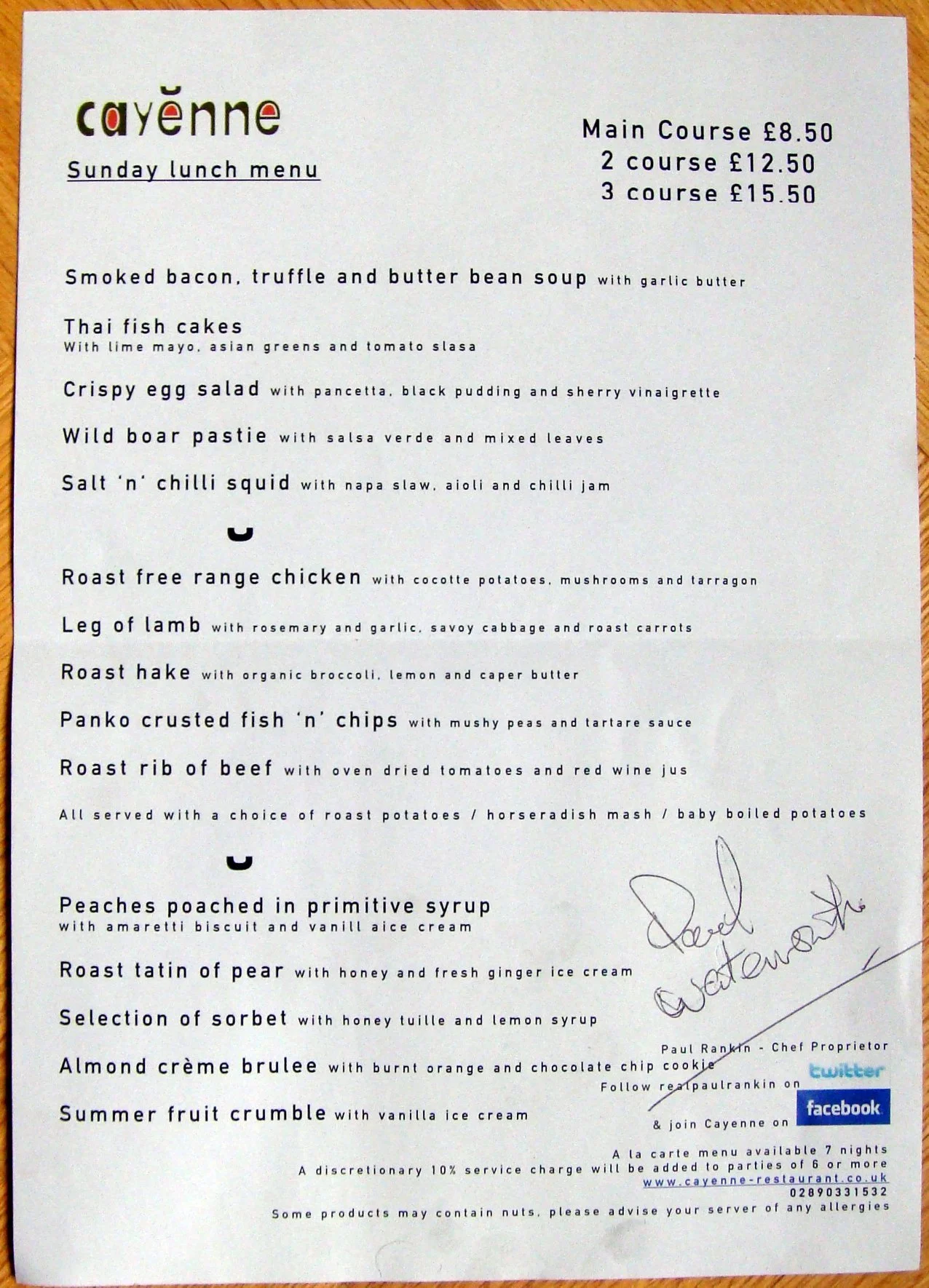
The menu offered a good economic selection allowing the customer to experiment if wanted or enjoy the familiar. Shown is a Sunday lunch menu, signed by Paul Waterworth, Executive Chef at Cayenne.
Reviews - or at least those that still can be found - were complimentary and experience clearly enjoyed thoroughly. One reviewer on Yelp described Cayenne’s lamb as “…the best lamb I've ever had. I could practically taste the lamb grazing free-range in the nearby hills.". Another on their blog though not intending to visit in the first place, went on to say “While I’m sure my low expectations probably helped, I honestly can’t remember the last time I ate at a restaurant that was so firmly on the money.” So it had food and price point going for it, though atmosphere or interiors were often overlooked, not mentioned or at worst impressed poorly.
To say Cayenne now being closed and Rankin not having any other venture quite like it is disappointing is an understatement. Cayenne could have become that place you visit year after year, time after time, enjoying a welcome consistency in quality and surprise. Had it not been for the political and economic turmoil at the time it might have survived. Maybe in the future something will pick up its mantle, but my adult self wishes it had experienced it in its prime.
