Rye Dough No. 1
The following was adapted from a fantastic little series of books called River Cottage Handbooks. River Cottage is a cookery school founded by Hugh Fearnley-Whittingstall situated in Devon/Dorset. The specific book I used was River Cottage Handbook No.3 - Bread by Daniel Stevens. Stevens lays out steps in thorough yet concise and not over-bearing proses making it an enjoyable and accessible read.
In the following recipe I used Doves Farm Organic White Rye Flour which is not a type of flour I would often reach to or have used much of previously. Rye flour is low-gluten so consequently does not rise as easily and typically results in a denser, cakier end product. But it otherwise offers nutrients and flavour bringing an interesting change to what I personally subject myself to, which is “white” breads of sorts.
As the ingredients show below, this was made at 60% (300ml/g water compared to 500g flour) hydration. Stevens recommends 1% dried yeast and 2% salt compared to whatever weight of flour you are using. In this case I used less salt and yeast because of the method I intended to use, specifically what Stevens calls (and of which might be regular jargon) the “sponge” method. Basically you add half of your flour, all of the water and yeast to a bowl and mix into a batter leaving it overnight to sour a little. The complete method can be found below with some notes on outcomes.
ingredients
500g Doves Farm Organic White Rye Flour
300ml water
9g dried yeast
5g sea salt
1 tbsp extra virgin olive oil
method
Mix half the flour (250g) with all of the water (300ml) and the yeast (9g) in a plastic or earthenware bowl. Leave overnight.
The next day mix the rest of the flour and salt into the sponge combining into a dough. In this case I added a little extra flour to make it less sticky and workable although this will reduce hydration and make it a drier dough/bread.
Add the extra virgin olive oil and fold in, kneading your dough for 10 minutes on a flat surface then shaping into a ball.
Leave to rise in a warm place for up to 2 hours in a clean bowl covered with cling film if not a linen towel. The dough should rise at least by 50% if not more.
After rising punch out the air, pour on to a flat surface and split into however many breads you intend to make. I opted for two long batons, so shape accordingly but do not over-knead the dough.
Leave to rise again loosely covered with cling film or a linen towel for 30 minutes.
Preheat your oven to maximum with a baking sheet or stone on the middle rack. Add a tray of water to the bottom of the oven.
Once 30 minutes are up, move your dough to a peel gently and slide on to the baking sheet or stone in the oven.
Cook for 15 minutes at maximum then reduce the oven to 200 degrees celsius (fan-assisted) and cook for an additional 35 minutes.
Remove from the oven and let cool on a wire rack before cutting.
notes
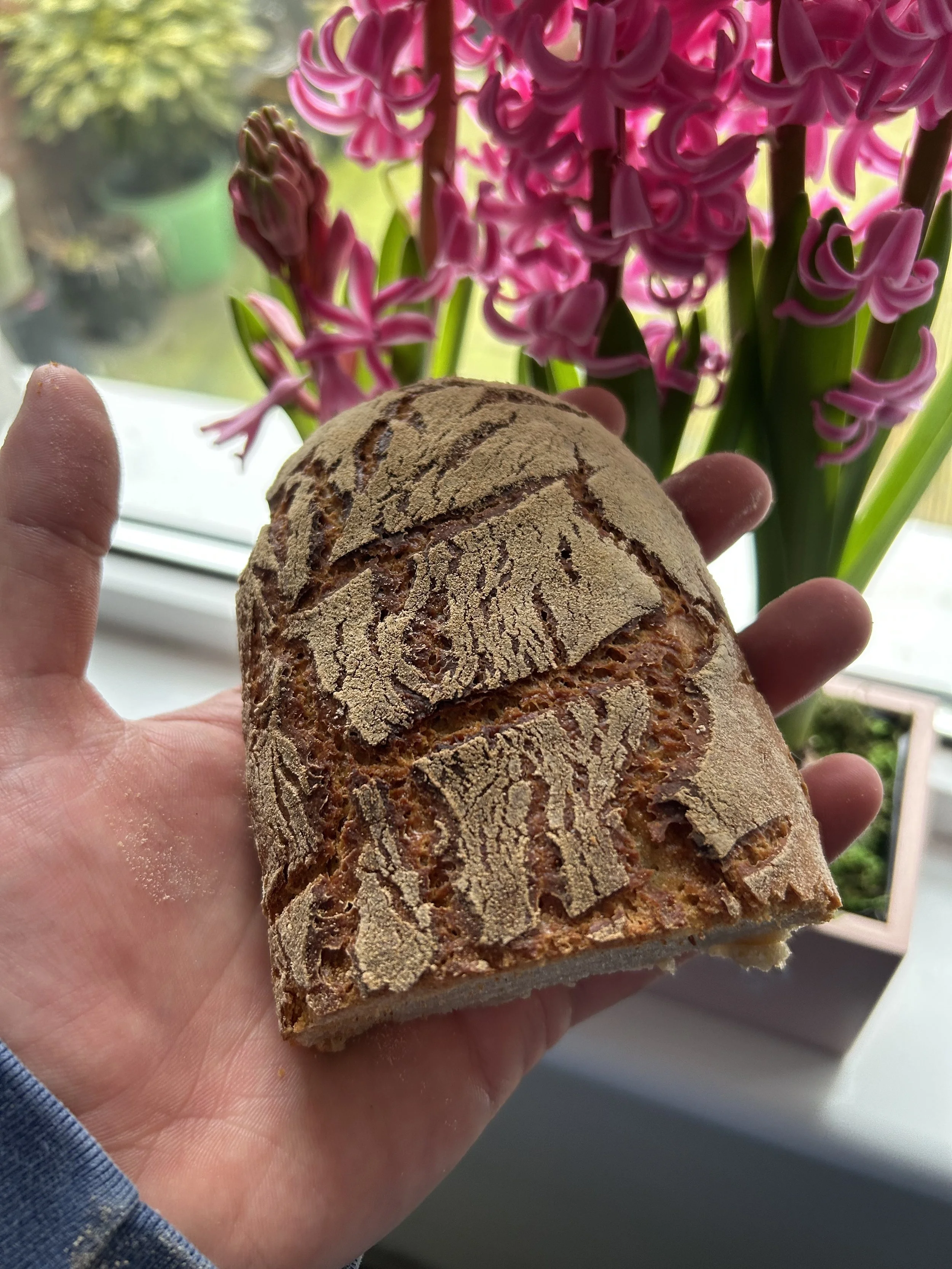
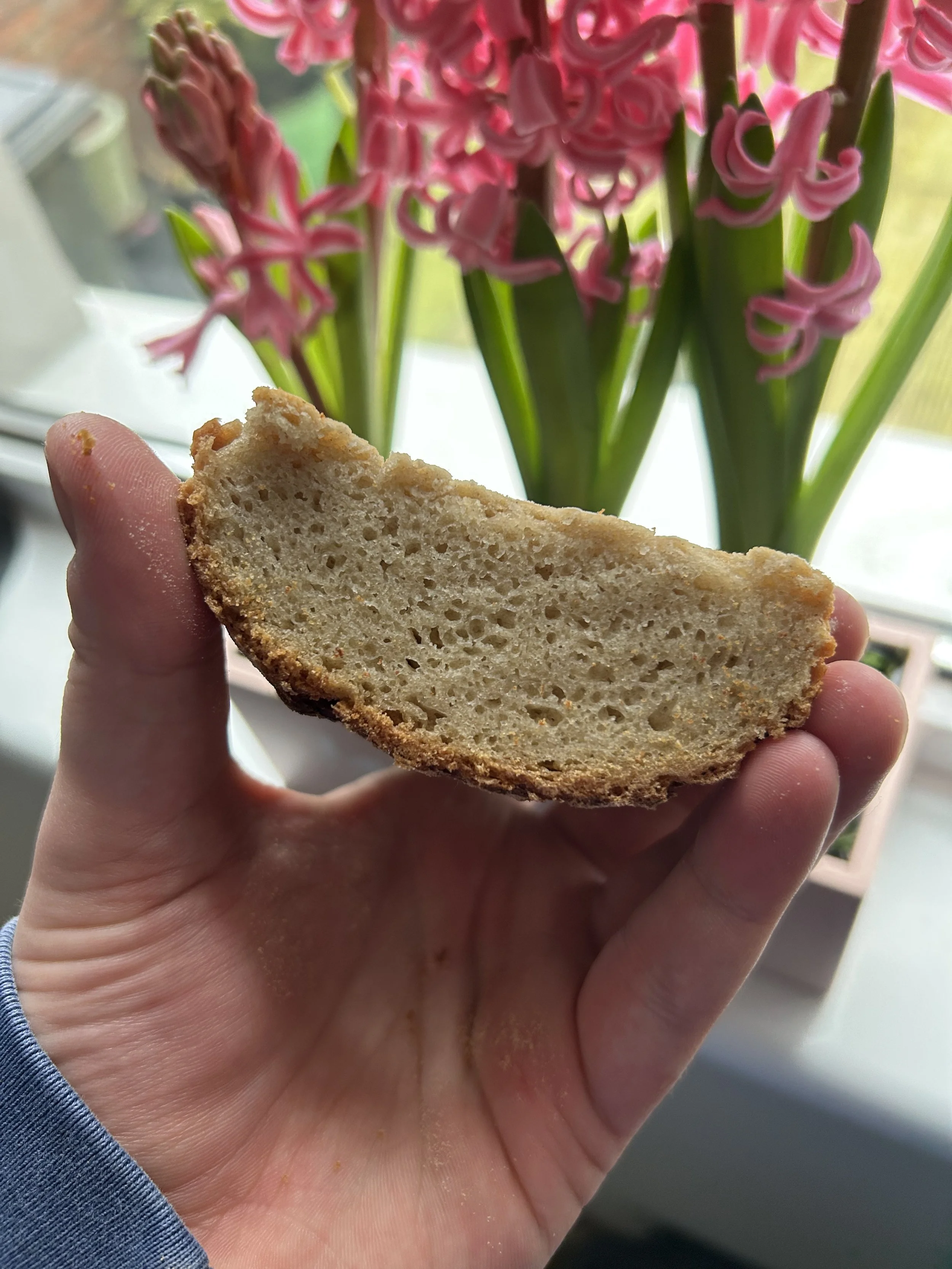
I feel it could have been left to rise longer since we are currently in a spell of colder weather, though I did place the dough close to the radiator. In saying this, dough can be left to rise too long as well since the yeast can run out of sugars to eat. There is definitely a fine balance to this. It may be that the second rise should have been longer since at this point they were left in my cold kitchen. Without significant rise the second time round the batons came out a little deflated.
I think I might have left the bread in a little too long since the top crust came out a beautiful colour but a little tough. The longer you leave your bread, Stevens did warn, the thicker and harder the crust. It is not exactly a mistake or problem, but more a personal preference as to the crust.
Stevens did make the point of suggesting the adding of regular wheat flour to rye since again as it is a low-gluten flour, it tends to not rise a great deal. This was evident in the final bread but it was tasty all the same.
I scored the bread too which again since rye is low-gluten did not lead to much opening up of the bread in those typical artisan breads and if anything might have aided in dehydration of the bread which was not to the benefit of it.
Anyway, some pictures of the bread can be found below which make it all very appealing, but I can definitely see tweaks being needed as per my notes.